Ihr könnt zurück nach WesterlandHol dir jetzt dein Deutschlandticket bei der BVG.Deutschlandticket bestellenVerbindungssucheStartZielJetzt losfahrenAbfahrtszeit eingebenAnkunftszeit eingebenWannZeitDatumErweiterte Suche— Ausgewählt: 0 VerkehrsmittelVoll barrierefreiVerkehrsmittelFernverkehrRegionalverkehrS-BahnU-BahnStraßenbahnBusFähre Filter zurücksetzenWeitere OptionenVerbindung findenNoch aktueller und es wäre Zukunft.Berlin-AboWichtige Infos zum Berlin-AboVorbestellung, Abo-Wechsel und Verkaufsstart: Alles was du rund um das Berlin-Abo wissen musst, findest du hier.Netzpläne und LinienWelche Linie fährt wohin?Alle Netzpläne für U-Bahn, Bus, Tram, Fähre und das Gesamtnetz sowie alle einzelnen Linienverläufe zum Download.BVG KarriereJobs shoppen im BVG-Job-StoreBesuche uns vom 08. bis 27. April in unserem Job-Store in der Mall of Berlin. Dich erwarten exklusive Events und Einblicke.FAQ und BestellungDas Deutschlandticket der BVGHier findest du alle Antworten zu deinen offenen Fragen und den direkten Weg zur Bestellung.BVG ClubTop-Angebote des MonatsHier findest du die Top-Angebote des Monats April im BVG Club.SozialticketDein Berlin-Ticket SAlle Informationen zur Beantragung der VBB-Kundenkarte Berlin S und zum Kauf des Berlin-Ticket S. JelbiÖPNV und Sharing in einer AppBerlins Öffentliche und Sharing-Angebote in nur einer App. Einfach Auto, Bus, Bahn, Rad, Roller oder Taxi nutzen und an Jelbi-Stationen und -Punkten zwischen ÖPNV und Sharing-Anbietern wählen.
StartZielJetzt losfahrenAbfahrtszeit eingebenAnkunftszeit eingebenWannZeitDatumErweiterte Suche— Ausgewählt: 0 VerkehrsmittelVoll barrierefreiVerkehrsmittelFernverkehrRegionalverkehrS-BahnU-BahnStraßenbahnBusFähre Filter zurücksetzenWeitere OptionenVerbindung finden
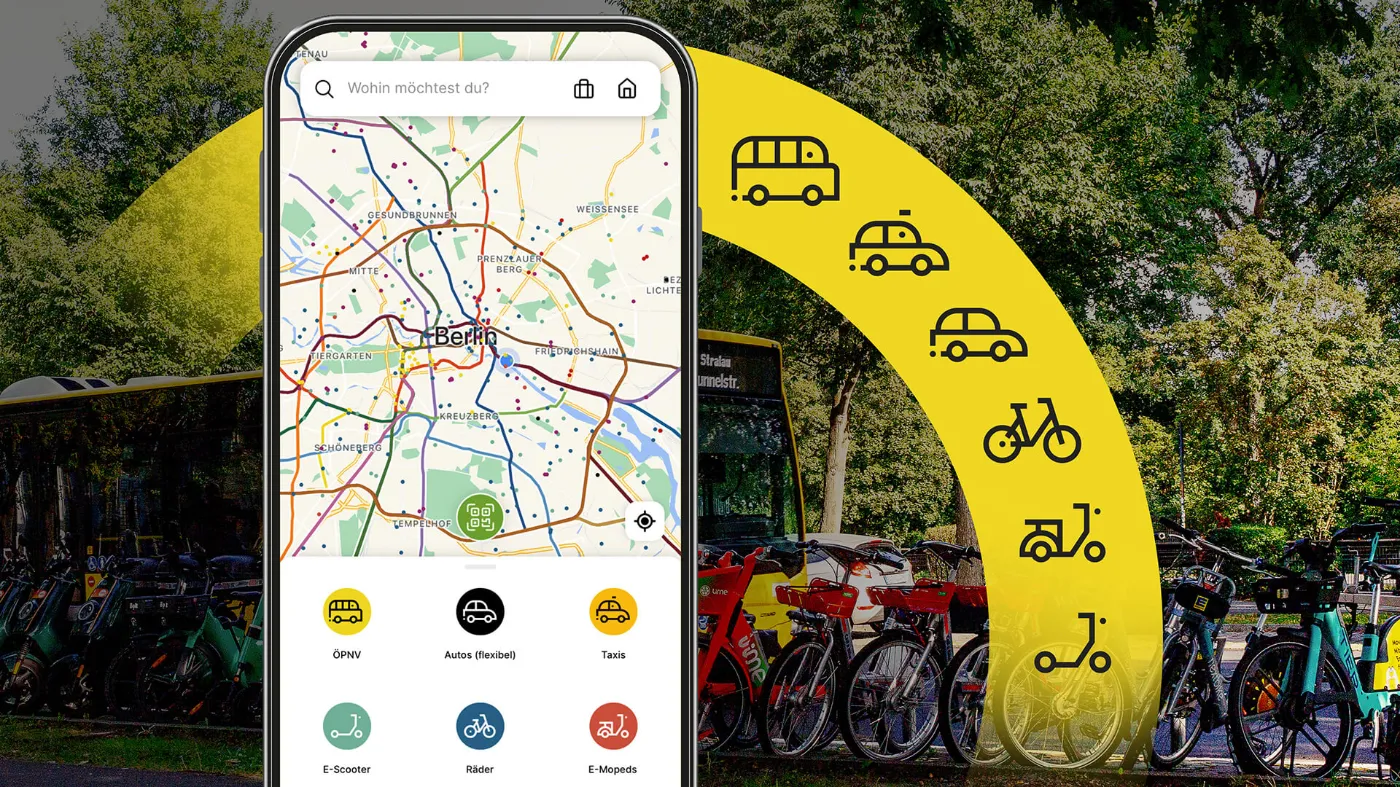
JelbiÖPNV und Sharing in einer AppBerlins Öffentliche und Sharing-Angebote in nur einer App. Einfach Auto, Bus, Bahn, Rad, Roller oder Taxi nutzen und an Jelbi-Stationen und -Punkten zwischen ÖPNV und Sharing-Anbietern wählen.