Autonomous shuttles for Berlin

Autonomous driving will create a brand new mobility system that caters to the personal needs of people living in Berlin.Through the NoWeL4 project, the BVG is testing autonomous shuttles in north-west Berlin in preparation for a citywide rollout.
The autonomous revolution starts in north-west Berlin.
The first VW ID. Buzz AD vehicles – equipped with state-of-the-art Level 4 technology that enables vehicles to drive autonomously – are now on public roads. What is currently a pilot project is paving the way for the subsequent ramp-up of Germany's largest fleet of autonomous vehicles as part of the public transport system. The pilot project's results can be scaled up to larger numbers of vehicles, reaching into the five-digit range, as well as to an expanded area of application.
The first vehicles are currently being tested on the road – without passengers. The next milestone will follow in the first half of 2026, when test rides with passengers will begin. The project is being funded by the Federal Ministry of Transport with a total of €9.5 million as part of the ‘Autonomous and Connected Driving in Public Transport’ (link in German) funding guideline.
The aim of this project is to combine traditional local transport with flexible, autonomous services – providing the initial impulse for a tailor-made mobility offering for Berliners.
What is NoWeL4?
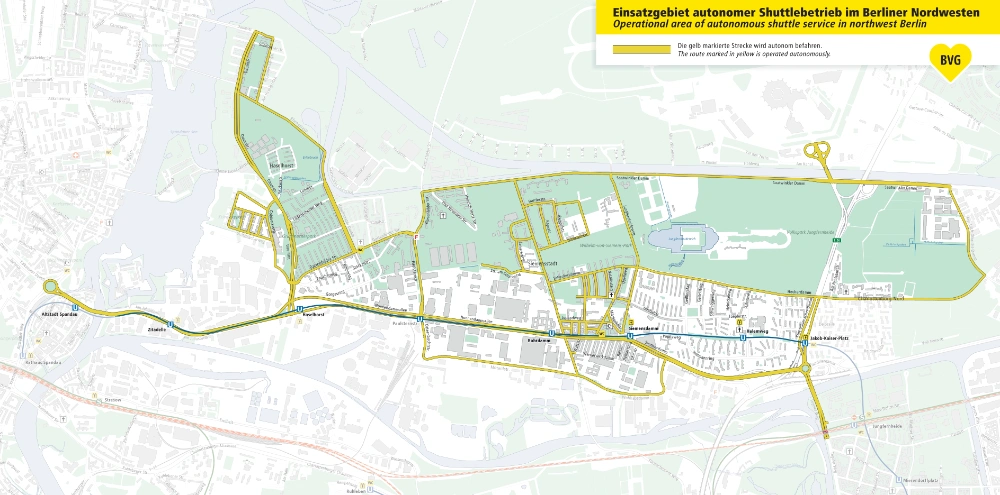
In Project NoWeL4 (which stands for Nord-Westraum Level 4), five vehicles will be travelling with passengers in a test area covering approximately 15 square kilometres. It encompasses parts of Spandau, Charlottenburg-Wilmersdorf and Reinickendorf. The test area on public roads is many times larger than in previous BVG projects. The vehicles will move freely within the defined area and serve around 80 bus stops and virtual stops as required. Unlike previous projects in Berlin, the new vehicles are capable of driving at autonomy level 4. This level is the prerequisite for a completely driverless operation. During these test drives, there will be a person in the ‘driver's seat’ for safety reasons; to monitor the processes and intervene in an emergency. The vehicles are also remotely monitored from a project control centre. After the test phase, which will end in 2027, autonomous progress is set to become an integral part of mobility in the capital.
During the pilot phase, passenger numbers will be limited to test groups only. Anyone interested in experiencing the future of local transport and helping to shape it as a test participant can apply. Details will be published in due course.
A prerequisite for the roll-out is series approval for the fleet operation of Level 4 vehicles by the relevant authorities at federal and state level in Berlin.
© BVG
Partners
NoWeL4 is a joint project led by the BVG.
Other funded partners:
- Zentrum für Technik und Gesellschaft (ZTG) der TU Berlin für die Nutzungsforschung
- Institut für Klimaschutz, Energie und Mobilität (IKEM) für die rechtswissenschaftliche Begleitforschung
Associated partners:
- Senatsverwaltungen für Mobilität, Verkehr, Klimaschutz und Umwelt
- Senatsverwaltung für Wirtschaft, Energie und Betriebe
Vehicle and technology partners:
All links are in German.

Our Vehicles
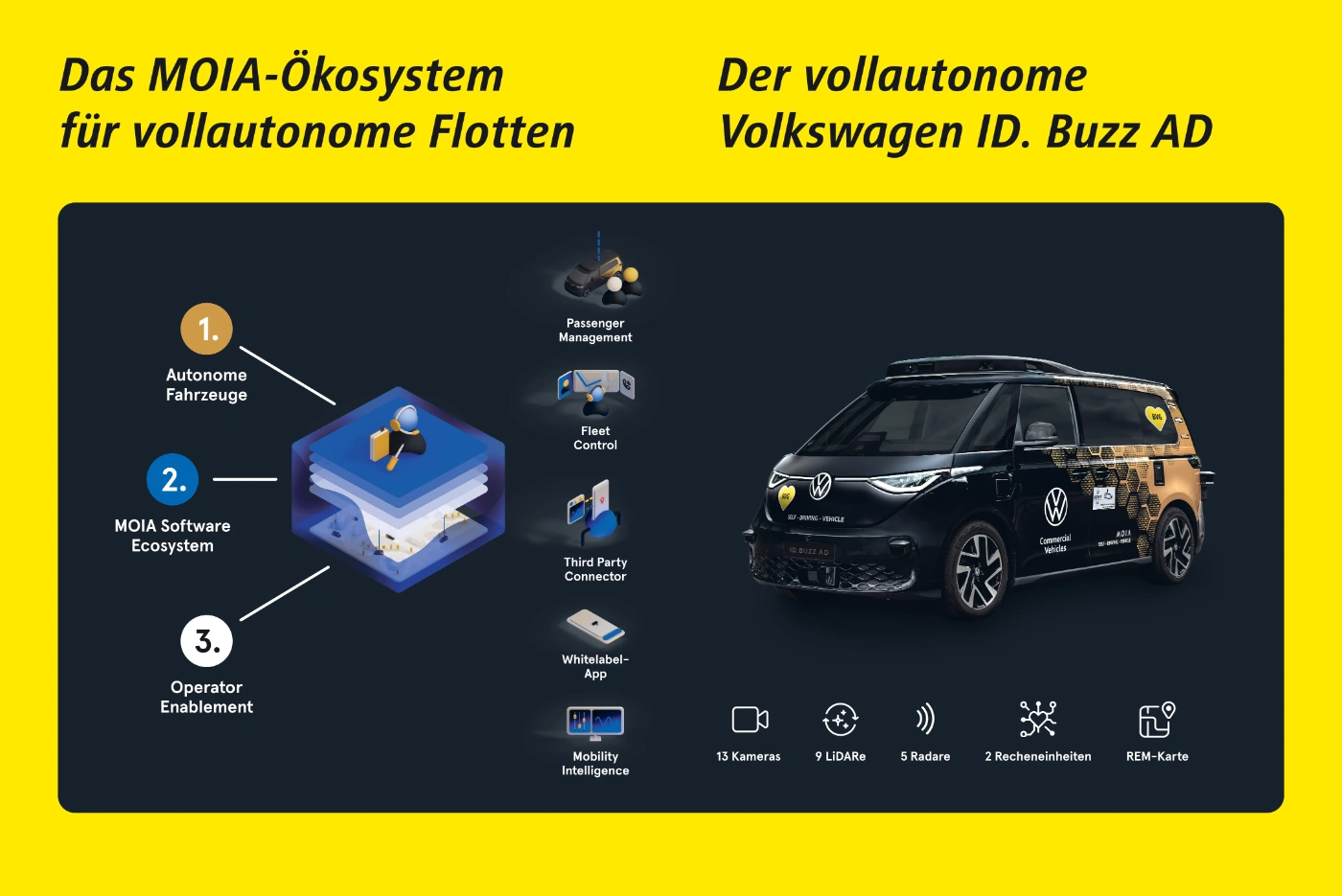
Five fully electric VW ID. Buzz AD minibuses are currently in use. These vehicles are equipped with state-of-the-art sensor technology: 13 cameras, 9 LiDAR and 5 radar sensors provide a 360-degree view and enable safe driving in all weather conditions. The vehicles are Level 4 capable, meaning they can drive completely autonomously. During the test phase, however, a trained safety driver is always on board to monitor the technology and intervene in an emergency. Monitoring is also carried out from a project control centre.
Schedule and Timeline
- 2023–2025: Preliminary planning and preparation
- Autumn 2025: Test and survey journeys without passengers
- First Half of 2026: Test operation with closed passenger groups
- From 2027: Approval phase
- Afterwards: Rollout phase for the permanent deployment of autonomous shuttles
Reservation and Usage
The shuttles run on demand – i.e. according to individual needs as opposed to a timetable. Bookings are made via an app, which shows the nearest stop and guides you to your destination. Operating hours are Monday to Friday from 9:00 a.m. to 4:00 p.m. Participation in the trial operation will be possible from 2026 onwards, following a successful application. Use is free of charge for test participants.
Accesibility
The vehicles currently used in our test operations are not accesible. However, the development of accessible solutions is a declared goal for later regular operation. A scientific institute is accompanying the project and investigating, with the involvement of people with disabilities and their association representatives, how everyone can benefit from this form of mobility in the future.